By 2050, more than one in four people on Earth will be African. This demographic reality shapes forecasts by The Economist that by 2030, half of all new entrants into the global labour force will come from Sub-Saharan Africa.
Yet, despite Africa experiencing a demographic boom, its football labour force is increasingly looking outward. At the 2018 FIFA World Cup, 34% of the players representing African nations were born outside the continent. By 2022, that figure had risen to 42%.
In the 2021 Africa Cup of Nations (AFCON), 27.5% of the players were foreign-born, a number that rose to 31.8% in the 2023 edition. Of the 603 players in the 2023 edition, 200 were foreign born with the majority of them (104) born in France. Only South Africa, Egypt and Namibia had squads comprising players born solely in the continent.
While these figures seem to contradict global labour force trajectories, they are a feature of the governance logic in Africa. As the population bulge also becomes a political powder keg, the tournaments and stadium demands of the Confederation of African Football (CAF) provide governments with a stage and an avenue for pacifying their citizens.
This analysis will illustrate the perverse incentives and interests driving decisions by CAF, states and football federations, and how the cumulative effect is a deeply neglected and politicised football industry, whose lifeline becomes dependent on footballers born and raised outside the continent.
Homeless at Home
In May 2021, just three months after South African billionaire Patrice Motsepe assumed the presidency of CAF, stadium bans were implemented in the continent, rendering 20 out of Africa’s 54 countries without a venue to host their home matches for the 2022 World Cup Qualifiers. Far from being a rupture, the stadium purge of 2021 was a culmination of years of threats, in which CAF had, albeit hesitantly, sidelined stadiums long before Motsepe took office.
But since the Motsepe regime commenced, some once banned stadiums such as Mali’s (reinstated in 2024), and Gambia’s (approved in 2024) have received a facelift and as a result, the greenlight to set up shop on home soil. Other countries like Ghana and Mozambique, whose national stadiums had at some point appeased CAF, have so far faced the axe and have been tasked to seek a neutral country to host their home matches while their governments tend to the subpar stadiums.
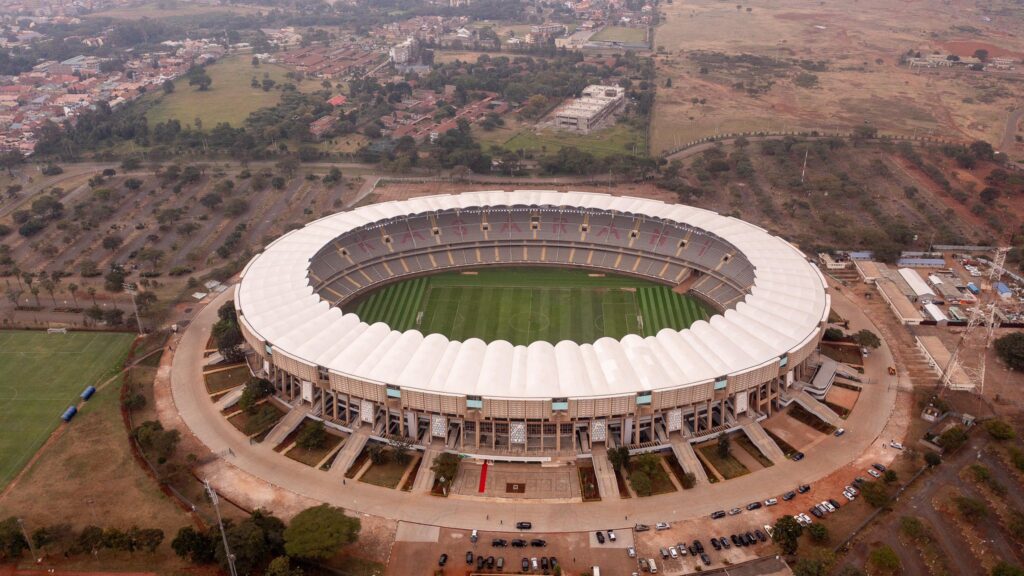
Countries with stadiums that perennially meet CAF standards such as Morocco and 2010 World Cup hosts, South Africa, become the neutral host ground for the homeless. In the 2026 World Cup Qualifiers, seven countries hosted their guests on Moroccan soil and South Africa– who charge a fee to the vagrants– rented to five countries.
Faced with the risk of missing out on the nine slots reserved for Africa in the World Cup tournament and 24 slots in AFCON, football federations– including those not backed by squad quality or historical precedent– scramble for neutral soil while lobbying their governments to not just uplift the stadiums due to the loss of home advantage, but to subsidize their trips abroad.
Due to the costly demands of intra-Africa travel coupled with the extravagant accommodation costs for team squads and personnel, countries end up expending incredible sums to honour just one fixture. For example, Kenya’s Football Federation divulged that it spent 21 million Kenya shillings, (approx 162,000 USD) to honour just one home fixture abroad.
The infrastructural stakes are higher for countries seeking to host CAF’s tournaments—AFCON and the African Nations Championship (CHAN). CAF, being the only confederation in world football that demands an explicit hosting and bidding fee from the interested nations, claims that hosting rights produce short term benefits such as jobs created during and in the lead up to the tournament (e.g stadium construction jobs), long-term gains in improved infrastructure, a boost to the economy and, an entry into the league of serious football nations.
For hopeful AFCON hosts, CAF stipulates that they must provide at least six stadiums—two of which must seat over 40,000 people—spread across multiple cities, alongside guarantees for hotel capacity, training grounds, transport infrastructure, and uninterrupted electricity supply.
In the lead-up to the 2021 edition, Cameroon spent an estimated 885 million US dollars preparing for the tournament. Ivory Coast, host of the 2023 edition (played in 2024), reportedly allocated over 1 billion US dollars to meet CAF’s requirements.
Despite assertions that hosting AFCON yields long-term economic dividends, indicators for previous host nations present a complex picture. The African Economic Outlook report indicates a modest growth rate for Cameroon primarily driven by the forestry, logging, and services sectors, suggesting a growth trajectory influenced by broader economic factors rather than a singular event like AFCON.
Equatorial Guinea, hosts of AFCON in 2012 and again in 2015, experienced a significant economic downturn. The report indicates that Equatorial Guinea’s GDP contracted in 2023 primarily due to shrinking in the oil sector, highlighting that a major sporting event alone may not insulate an economy from fundamental structural weaknesses or global market shifts.
What’s more, the stadium demands are usually met by Chinese state-owned enterprises operating under turnkey Engineering Procurement and Construction contracts, meaning not just the funding, but the design, engineering, materials and labour are sourced externally, allowing the governments to bypass procurement hurdles and deliver showpiece projects within two to three years.
Beijing’s expanding footprint in African football infrastructure has raised questions that go beyond the stadiums themselves. In cases where grants are not on offer, as with Malawi’s Bingu stadium, governments take on debt for assets that rarely generate income streams. This is compounded by the fact that most stadium agreements through the EPC models limit technology transfer and local capacity-building.
While the Chinese-built stadiums are often delivered on time, the routine repairs, safety compliance, staffing, and usage optimization are left to governments whose already thin budgets compete with essential sectors like public health and education.
So, if CAF’s flagship tournaments and the infrastructural renovations do not present substantial return on investment for African economies, why do governments continue to bid, build, and go in debt for them?
Nation Building or Nation Blinding
The anticolonial rebellions, post‑independence dictatorships, and late‑cold‑war militarism across much of the continent are crucial for understanding why the bounce of the ball is inseparable from the boxes of the ballot and the bullets in the barrel.
From Algeria’s FLN team in 1958 using football to fund and broadcast anti-colonial revolution, to President Mobutu of Zaire (now DRC) in 1974 making World Cup appearances state-mandated proofs of ideological supremacy, football in Africa has served the interests of the revolutionaries and reactionaries alike, such that neglecting it becomes a political peril.
Futhermore, in contemporary Africa, where eleven heads of state have been in office for more than 18 years, some of them governing societies where the median citizen is still a teenager, the political pliability of football is increasingly vital to regime survival.
It is therefore no surprise that of the six stadiums demanded by CAF for AFCON 2023, the tournament’s centrepiece in Ivory Coast was named after 83-year-old president Alassane Dramane Ouattara. The pomp and gaiety in the 60,000-seater stadium during the final match between Nigeria and Ivory Coast gave the tell-tale crescendo of the host’s rise from a civil war in 2011, of which Ouattara himself was a chief catalyst.
Ouattara, whose lifespan exceeds the national average of 62.7 and who presides over a population with a median age of just 18.5, came into power after a disputed election triggered the civil conflict that killed over 3,000 people. He has since revised the constitution twice to extend his stay, most controversially in 2020 when he claimed a third term following the death of his chosen successor.
During the tournament, Ivory Coast faced near elimination in the group stage, qualifying for the next round as “best loser”. Ivory Coast then sacked the head coach mid tournament, eventually scraping through to the finals. If their circuitous journey to the finals mirrored the woes of their democracy, their eventual triumph highlighted the tenacity and resilience that springs a nation from the throes of civil war to the centre stage of continental glory.
Hosting and winning AFCON was thus heralded as a triumph of nation building and a spectacle signalling the nation’s return to stability and continental prestige. When the match ended 2–1 in favour of the hosts, the jubilations at the Alassane Dramane Ouattara Stadium were not just a release valve, a catharsis of sorts to Ivorians, they effectively functioned as anaesthesia.
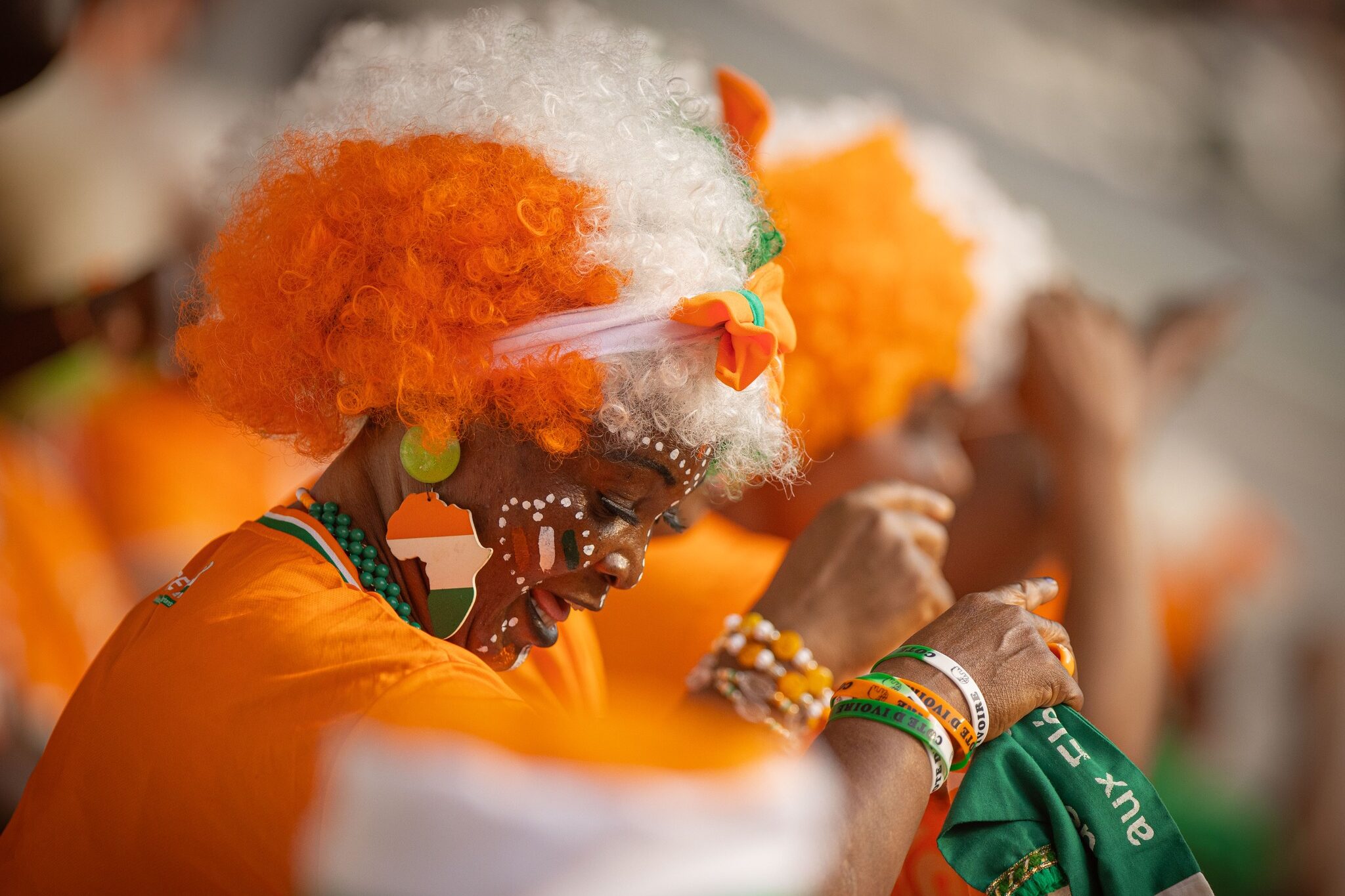
Beyond supplying political capital through tournaments and stadium projects, state elites in Africa often leverage CAF’s tournaments as a safety valve, offering a fleeting spectacle of unity or progress to contain public discontent and delay demands for accountability.
Kenya offers a vivid example.
In June 2024, Kenyan, demonstrators surged into parliament, setting part of it ablaze, all in protest against a tax bill whose passage into law would exacerbate the high cost of living. Since then, there have been continued anti-government dissent, some of it heard during a World Cup qualifier against Gabon. Almost one year after the parliament was lynched, Kenya, alongside Uganda and Tanzania, hosted the CHAN tournament. The tournament has thus far been successful in resetting the national mood.
If states gain so much from football’s spectacle, what role do the football federations play and how did they become indistinguishable from the state itself?
Merchants of Plausible Deniability
Because Africa’s early football organisers were town elites aligned with colonial or emergent state power, the game’s institutional development had nation-statist inclinations before CAF’s founding.
Sir Stanley Rous, then secretary of the English FA, seized on that tilt, becoming a key powerbroker for Africa’s 1954 zonal recognition at FIFA. Rous argued that a loose network of continental confederations would keep FIFA from becoming a bloated Euro-bureaucracy and lobbied alongside Egypt’s Abdallah Salem for Africa’s recognition. Three years later after FIFA recognized Africa as a confederation, CAF was formed in Khartoum in 1957.
To prevent football federations from colonial territories or unrecognized breakaway regions from joining CAF, CAF enacted a filter that only UN recognised African states could apply for membership. This pan-Africanist requirement–– that only independent African states supply member associations–– effectively tethered the legitimacy of African football associations to their emergent states and vice versa.
Thus, the collusion and collision of the state and football federations, seemingly counterintuitive to the ethos of FIFA’s non-interference doctrine, is a structural design that CAF ratified.
Furthermore, that football was a pathway for agitators-turned-statesmen, meant that the independent nation states contracted part of their legitimacy to how well football was governed, especially on the national level.
Hence, for the states lacking strong public services, institutional trust, or procedural fairness and whose precarious legitimacy is exacerbated due to corruption, football becomes one of the few remaining arenas where state legitimacy can be performed and momentarily secured.
This dynamic makes FIFA’s non-interference policy a powerful pressure point. Football associations that embezzle FIFA funds often exploit this vulnerability, knowing that if the national team or federation fails, all blame will fall on the state.
In the 2016-2022 report of the FIFA Forward Development Funds, African football federations were the largest recipients, receiving 518 million US dollars in total. Out of this, 118.7 million US dollars went solely to infrastructure with FIFA noting that 94 new pitches were laid out. Alongside funds for national teams and competitions, federations also received funds for capacity development in education and training for coaches and referees.
Despite this, federations across the continent systematically fail at their most basic mandate of developing domestic football. As previously demonstrated, the operating costs that the Zurich transfers are supposed to underwrite are routinely off-loaded by the state.
At the same time, federation officials routinely plead poverty for domestic operations even as they budget for large delegations to FIFA and CAF junkets, which investigative reporting traced six-figure congress bills to the Nigerian FA.
In other cases, the very expenses that FIFA Forward money is meant to subsidize are invoiced to those who need the subsidy most.
For example, in Zambia—where the median living wage is 121 USD per month—the football association charges 215 USD for a CAF C license which is valid only in grassroots, youth and amateur sides anywhere within CAF’s 54 member countries.
At most, this license allows a coach to sit on the bench as an assistant in continental club competitions but it is not enough to head-coach a top-flight or national-team squad, nor does it carry weight outside Africa because other football confederations and their members do not recognise CAF licenses.
Zambia’s licensing hurdles are one facet of the problem. In Ghana the pressures surface more visibly in the decline of the premier league which now averages fewer than 800 spectators a match, down from five-figure crowds two decades ago. Prominent clubs such as Asante Kotoko and Hearts of Oak usually resort to ad-hoc salary settlements and debt restructurings just to keep the lights on.
Even where sponsorship for elite clubs looks entrepreneurial, patrons are almost always political actors. Whether through direct subsidies, politically aligned sponsors, or informal patronage networks, most clubs remain tethered to public coffers or political ambition.
The effect of this is that African footballers, clubs and leagues are trapped in a cycle of exploitation, surviving if and when they are politically useful.
If the industry is essential mostly for political clout and football associations have abdicated their role of developing the sport, how is the systemic neglect masked and how is the spectacle sustained?
Anatomy of a Dysfunctional System
Due to the neglect of the African football industry, players in local leagues can hardly compete with their European-based counterparts in international competitions.
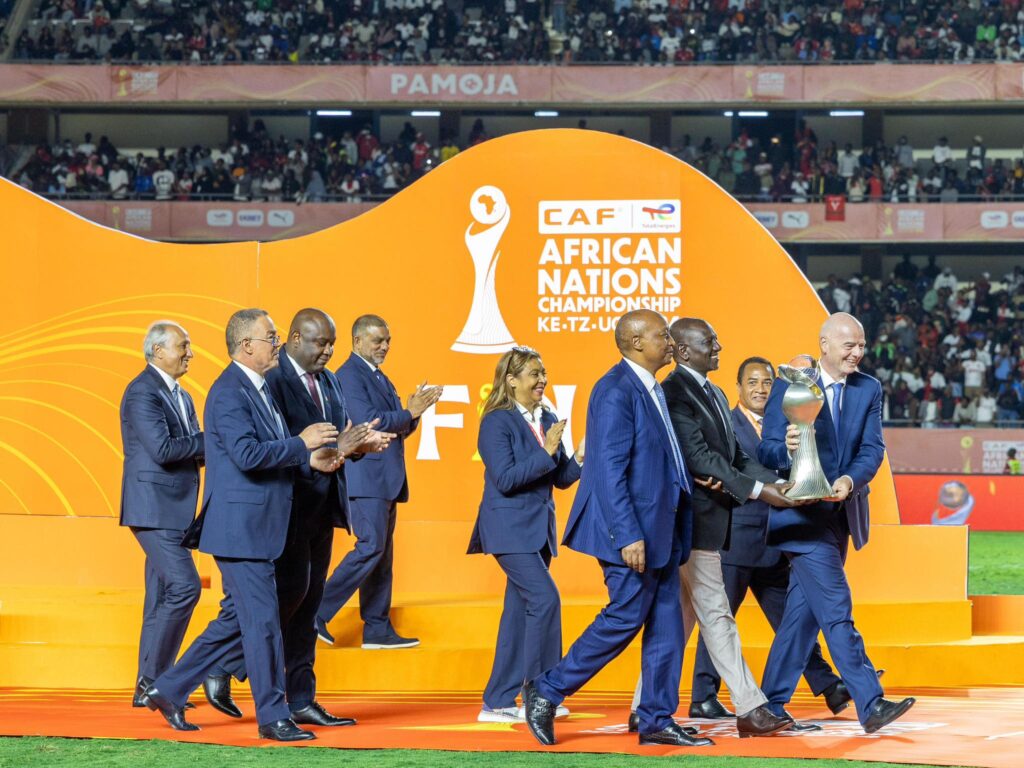
In response to this widening quality gap, the strategy for African football federations and CAF was twofold. First, CAF launched CHAN in February 2009 as a tournament exclusively for players plying their trade in their country’s leagues. In this article, I argue why the CHAN tournament is a confession of a broken system.
The second strategy, deployed by African football federations, shifted from developing domestic talent to recruiting it from abroad.
In June 2009, An Algerian-led motion at the FIFA congress successfully challenged the age-21 limit on changing national teams, lifting a barrier that had constrained players with dual nationality everywhere, including many Europe-born players of African descent.
A decade later in 2020, Morocco led a second, deeper reform that allowed players to represent another nation if they had made less than three competitive appearances before turning 21. In other words, players who had only played once for a national team, or appeared a maximum of three times before age 21, could now switch to represent a different country. This effectively opened the door for athletes with dual citizenship or heritage ties to change their international allegiance.
The successful national team rule changes enables African football federations to scour family trees, plucking from the lowest hanging fruits in better run associations abroad. African states who are complicit in the charade relax or fastrack nationality paperwork to capture diaspora talent–– Tanzania’s and Ghana’s cases being good examples of this trend.
In instances where dual nationality is outlawed, such as the DRC where the resident population is 109 million, passports are offered to the diasporans for sporting or diplomatic purposes.
The result is an increase of foreign born footballers in African national team squads, whose good performances on the pitch shields the football federations’ neglect of the dilapidated local leagues. Their exploits on the pitch also give the state a ready justification for public investment in stadium boondoggles and the costly CAF tournaments.
The performances of the expatriates also bump their respective nations up the FIFA rankings, giving FIFA a justification for the inscrutable FIFA forward development funds and a chance to claim they are developing the sport in small countries like Comoros.
According to FIFA, Comoros’ ascent up ten places in 2024 was enabled by FIFA’s investment in a technical training center and renovation of two stadiums. However, in Comoros’ World Cup qualifier hosting Chad, its first eleven squad comprised ten French born nationals. The match was played in Morocco.
As for CHAN, the optics project continues to collapse under the weight of its own contradictions and lack of incentives. Somalia pulled out of the 2025 qualifiers and Eritrea alongside a string of nations have ducked recent campaigns for financial or political reasons, making CAF inject a 32% prize money bump for the 2025 edition.
The contemporary justification for CHAN’s existence, according to CAF, is that it is “a showcase of Africa’s best home-grown players, often providing a springboard for emerging stars to secure moves abroad.” The initiative which was meant to incentivize the growth of home leagues now prides itself in being a launch-pad for departure, all while CAF’s flagship tournament, AFCON, mutates to a EUROs 2.0.
Due to football federations’ neglect of grassroots development– leaving fans with little connection to domestic football– and corrupt governments hollowing out purchasing power through economic mismanagement, costly match tickets and fan apathy has led to increasingly empty stadiums.
But since the show must go on especially in matches where the state’s performed legitimacy is crucial and FIFA or CAF’s commercial stakes are higher, football federations and states end up subsidizing and incentivizing fan attendance through free tickets or even coerced attendance.
The Long Game for The Long Con
In a previous article, my prescribed solution that African states via the regional blocs in the African Union bypass FIFA frameworks to govern football was idealistic if not outright naive––because the politicisation of football is a key reason why the football ecosystem in Africa remains underdeveloped and, all the parties involved have little, if any, incentive to self-correct.
While the problems across the continent might share the same patterns due to similar colonial histories and the decrees of transnational bodies, the solutions cannot be.
Promisingly, that we are at the crux of a global order where the roles and mandates of transnational institutions are increasingly challenged, should be the wagon we hitch our stars to.
First, the political discontent across much of Africa should be anchored to the calls for decentralisation of powers of the various states. It is not enough that we get rid of authoritarian leaders but the instruments enabling such governance have to be weakened. Of course, the degree for such reforms will vary depending on the nature and type of democracy in the country as well as the political fabric in place.
Senegal’s sweeping communalisation in 2013 establishing 557 elected communes covering every corner of the country and Kenya’s decentralisation of governance into 47 counties have shown that African states can bring governance closer to citizens. Granted, these models are not perfect but are examples of the direction that African citizens have to continue forging. As such, citizens with already decentralised systems in place should actively engage in politics whilst pushing for deeper reforms with fiscal and legal autonomy, revenue authority and local accountability mechanisms.
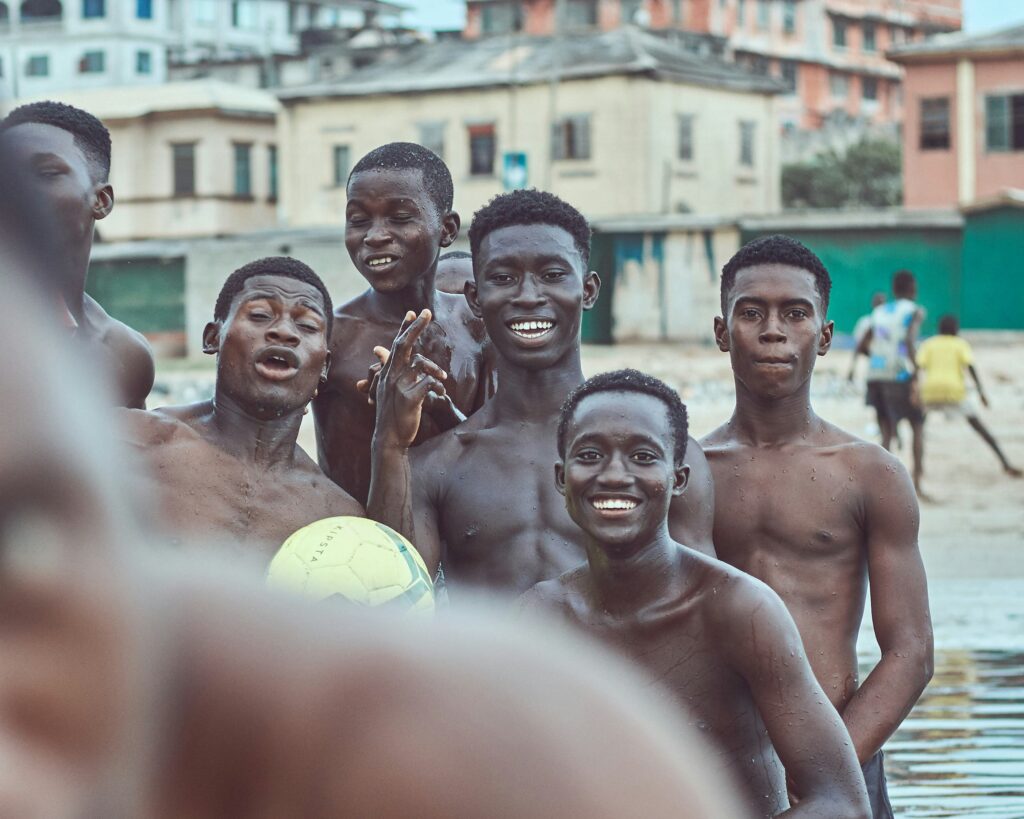
Second, in the football milieu, there already exist examples of breakaway leagues that provide a model for a different ecosystem. For example, in Nigeria, Lagos Liga, a private 7-a-side league intentionally works outside the framework of FIFA. African players, including the diasporans, should channel their considerable capital and influence into directly investing in and redistributing resources towards these independent leagues. The failing ecosystem in Africa will only self correct if and when its shell—the sponsorship and corporate deals— is exposed and the roots are cut off (the athletes, coaches, fans).
These independent leagues can and may only be successful in countries where the state’s reach is not an existential risk for its citizens because football federations, conspiring with the state’s apparatus, may impede such developments. Even so, the very demand to utilize the costly, underutilized stadiums may, paradoxically, exert pressure on governments to seek tenants beyond the football federations. As such, the independent leagues may find themselves presented with opportunities to utilize state-owned stadiums, potentially offering mutual benefit by giving states a means to justify their boondoggles while providing better facilities for the private leagues. Yet, this path must be navigated with extreme pragmatism.
Third, as for the states’ investments in sport infrastructure, civil rights organizations’ role becomes paramount especially in countries such as Ghana, Nigeria and Senegal where such groups can and have moved the needle in matters governance. Alongside demanding that contracts for costly stadiums be made public and justified, these groups should advocate that state investments are channelled to critical and underfunded sectors such as public health and education.
If there is genuine interest by the states to be involved in sport development, these should be administered within ministries of education by investing in school sports, physical education, and accessible community facilities for citizens.
Much as the burgeoning African youth may be a necessity for the rest of the world to function, the change of tides in global discourse surrounding immigration and globalization should not find African youths hoping to set sail abroad. For this to be mitigated, Africans in the continent and diaspora should muse more about how to develop, retain and redistribute capital within the continent.
The only way out of this long con, is a pragmatic and strategic long game which involves very little of the institutions selling our futures and very much with our collective effort. Otherwise, we risk replicating the very dynamics that got us here in the first place.
This is great – love the insights and triggers to introspect.
We clearly piggyback on the hype that does more damage than elevate our continent.
I really enjoyed reading this piece. Beautifully written and very well argued.
Fantastic analysis of the relationship between politics and federations- and the policy that marries them in this dysfunctional union that yields no benefit for the people they should serve.
Bravo!