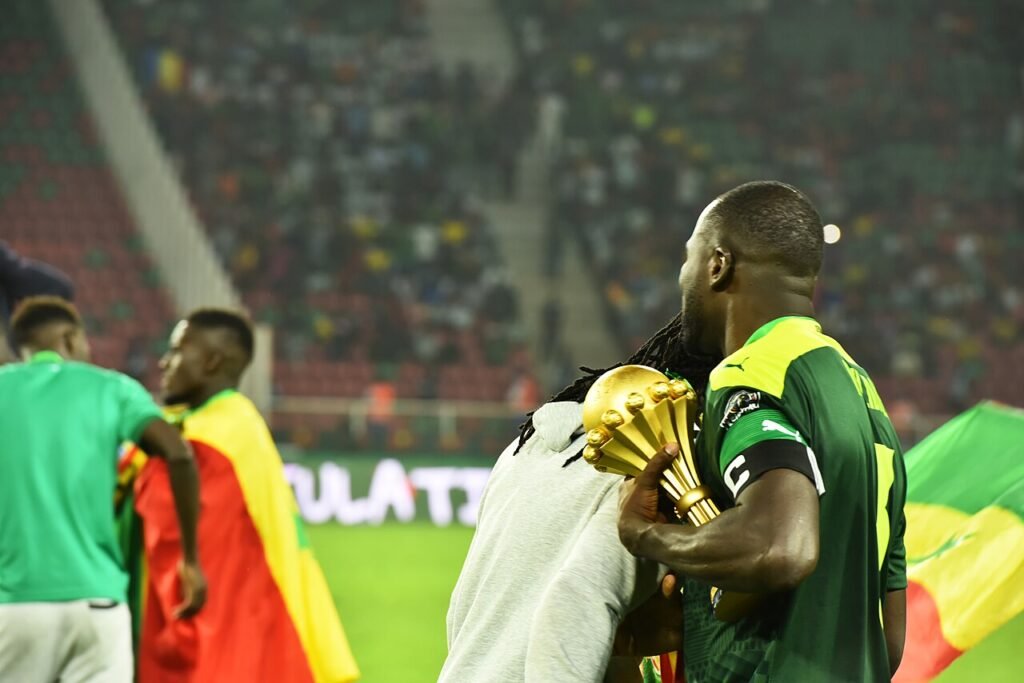
The website of the Senegalese presidency recounts that its president, Bassirou Diomaye Faye, received a standing ovation at the Africa-France business forum when he affirmed that Senegal were the Africa Cup of Nations (AFCON) champions. Faye invoked the ovation-inducing-remarks on a panel he was sharing with the presidents of Botswana, France and Kenya On 11 May 2026–– nearly four months after the final match had been played. It was not prophecy or banter. Nor was it an inappropriate remark for such a forum because, for one, Faye and his contemporaries were on the “high-level panel on Sport and Development,” at the University of Nairobi and secondly, the matter of who exactly was Africa’s football champion had become an out-of-field deliberation. Senegal had beaten Morocco 1–0 in the final in Rabat after its players briefly walked off in protest against a late penalty awarded to Morocco, but the Appeal Board of the Confederation of African Football (CAF) later overturned the result and awarded Morocco the title by forfeit. When Faye was speaking in Nairobi, Senegal’s appeal was awaiting adjudication at the Court of Arbitration for Sport (CAS) in Lausanne, Switzerland.
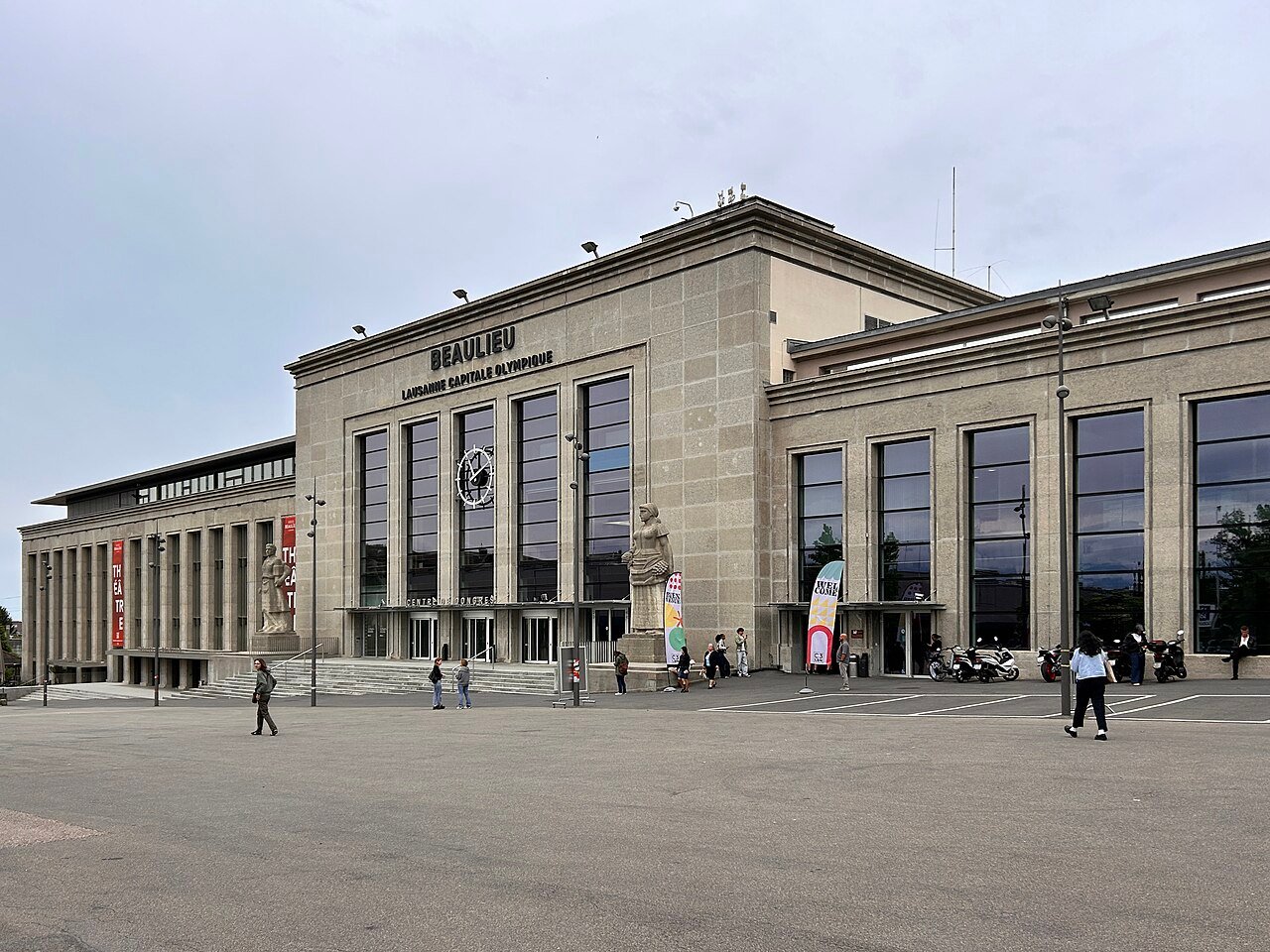
More than six months after Faye made the remarks, vindication for the Senegalese president arrived hot off the bench from the court in Switzerland. A standing ovation be damned. CAS ruled in favour of Senegal’s appeal against the decision by the CAF Appeal Board that declared Morocco AFCON Champions.
Notably, Faye was speaking at a summit where African leaders were debating how Africa might exercise greater authority over the institutions that assess its economies, price its risks, mobilise its capital and determine its development. And yet when it came to determining the winner of Africa’s own football competition, the answer was awaiting a tribunal in Switzerland. How did we get here? And what does that arrangement reveal about sovereignty in African sport?

Senegal’s journey to Lausanne is not unusual within organised sport. International sport has developed its own system for resolving disputes, justified partly by characteristics said to distinguish sporting competition from other activities: competitions conducted across national borders under common rules; tightly connected calendars in which one result determines what happens next; and disputes involving rules and practices unfamiliar to ordinary courts. A decision about eligibility, discipline or the result of a match may be practically useless if it arrives after the tournament has ended.
These conditions have supported the justification of specialised sports arbitration. The process ordinarily begins inside the organisation governing the sport. While some decisions remain with the match officials, other disputes—including questions of discipline, eligibility, forfeiture and the interpretation of competition regulations—can be placed before an internal judicial body. Its decision may then be reviewed by an internal appeal body. Once the available internal procedures have been exhausted, an eligible final decision may be appealed to the CAS, the arbitral institution in Switzerland that vindicated Faye. CAS itself describes appeals arbitration as the review of a sports body’s decision after its internal remedies have been exhausted.
CAF follows this structure. Its Disciplinary Board hears disciplinary matters and breaches of CAF regulations at first instance. Its Appeal Board reviews decisions of the Disciplinary Board and other CAF bodies where an appeal is permitted. Decisions of the Appeal Board are final within CAF, subject to an appeal to CAS where an appeal is permitted. Morocco’s challenge therefore followed this structure. It began before the CAF Disciplinary Board, proceeded to the CAF Appeal Board and arrived in Lausanne when Senegal appealed the reversal of the match result.
Sport’s peculiar characteristics have been used to justify both specialised dispute resolution and its institutionalisation through CAS. This does not make debates about CAS’s existence, legitimacy and independence scant, but it is separate from the question of why CAF made it the final appellate forum for disputes arising in African football and what that decision has meant for governance and (sports) legal capacity on the continent. As I argue, it has weakened the incentive to build local and regional capacity on lex sportiva (transnational sports law) and allows CAF affiliates to shift the consequences of their governance failures onto others.
CAF’s own statutes provide the starting point. Beyond requiring that an African national association applying for CAF membership must declare that it will comply with the jurisdiction of CAS, Article 46 of CAF’s statutes prohibits national associations, leagues, clubs and club members from taking disputes with CAF or other associations, clubs or club members before a court of law. Where national law gives them that right, CAF requires the national association to insert into its statutes a clause through which the association, its clubs and their members “freely” renounce it. Meaning, if Ghanaian law gives the Ghana Football Association, its clubs or their members the right to take a covered dispute before a Ghanaian court, CAF requires the association to insert a provision into its own statutes through which they renounce that right and agree to resolve the dispute through an arbitrator chosen by mutual agreement.
The Football Association of Malawi invoked precisely this arrangement when its former national-team coach, Patrick Mabedi, sued it in Malawi’s Industrial Relations Court following his dismissal in October 2024. The association objected to the court hearing the case. Citing Article 46 of CAF’s statutes alongside FIFA’s and its own provisions, it argued that Mabedi’s dispute belonged within football’s arbitration system rather than before a Malawian court. It told the court that Malawi had a National Football Arbitration Tribunal capable of hearing disputes involving coaches, players, clubs and football officials. That is, the association which was being sued argued that they themselves had their own legal body which the party suing them could and should go to. The Industrial Relations Court, whose authority over employment disputes derives from Malawi’s Constitution and Labour Relations Act, refused to surrender its jurisdiction to an arbitral mechanism that the association could not show was operational when Mabedi was dismissed. It subsequently found Mabedi’s dismissal substantively and procedurally unfair.
CAF’s statutes do not treat the requirement to “freely” renounce the right to take football disputes before national courts as optional. They state that an association violating any part of this provision “shall be expelled” from CAF. That includes an association failing to insert the court prohibition into its own statutes. National associations have, in turn, reproduced and enforced the prohibition against their own officials. In July 2026, the Liberia Football Association expelled Cassell Kuoh, the president of a local football club, and banned him from football related activities after he obtained an injunction from a Liberian civil court challenging the association’s electoral process. The association’s Appeal Committee later overturned the expulsion on grounds that its Congress, instead of the disciplinary committee, had the power to ban Kuoh. The appeal turned on the disciplinary committee’s authority and its lack of a quorum, not whether Kuoh had committed a sanction worthy of expulsion from football. Whatever ‘expulsion from football’ means notwithstanding.
Importantly, CAF’s prohibition to go to court does not operate on a continent without specialist sports adjudication. Across Africa, legislatures, courts, and sporting organisations have and continue to develop different institutions for resolving sports disputes. Morocco established a sports arbitration chamber through legislation. South African professional football, on its part, developed a dispute-resolution chamber operating alongside labour and ordinary courts. Kenya placed a Sports Disputes Tribunal within a statutory framework and gave the Judicial Service Commission responsibility for appointing its members. Egypt’s attempt to establish a national sports arbitration centre has itself been tested through constitutional litigation and legislative reconstruction.
Granted, these arrangements do not constitute a settled or uniformly successful African system of sports justice. They differ in jurisdiction, independence, resources, accessibility and their relationship with public courts. That incompleteness is itself instructive as it shows national legal systems attempting to determine which sporting disputes require specialist treatment, which remain employment or constitutional matters, and how far private sporting rules may displace public law. When CAF’s rules require national associations to renounce recourse to ordinary courts and reproduce that prohibition in their own statutes, a dispute removed from a national court is also removed from the process through which domestic courts build, case by case, their own understanding of lex sportiva and give it meaning in the context of the social, political and economic realities of the countries they serve.
Figures in select studies and data show why these questions have practical weight for African football. Of the 139 published CAS football decisions examined in a study covering 2020 and 2021, the principal appellant came from Africa in 34 cases and from Europe in 36. If this is how regularly African football contributes to the cases through which sports law develops, what opportunity do its own courts have to shape that law when CAF requires its members to renounce access to them?
Further, who gets the experience of deciding those cases once they are in CAS?
African arbitrators accounted for roughly 7% of the names on CAS’s general list in April 2026. An earlier FIFA report gives us a sense of how often CAS actually called on African arbitrators in football cases. Between October 2022 and November 2025, 669 appointments were made in non-confidential football proceedings, either to decide a case alone or to chair a three-person panel. European arbitrators received 512 of those appointments. South American arbitrators received 87. African arbitrators received two.

Not only do CAF’s provisions limit the capacity of local legal bodies to build the muscle for sports law, they also allow CAF itself, its member associations, clubs and club members to eschew the consequences of their own governance failures.
Case in point, in January 2022, the Football Association of Zambia (FAZ) gave the Croatian coach Aljoša Asanović a four-year contract to lead its men’s national team. By September, Asanović had terminated the contract. His lawyer said FAZ had fallen behind on his salary. According to FAZ’s new general secretary, Asanović had initially claimed about USD 41,000 and was willing to accept USD 20,000 to part ways, but the previous administration declined. Asanović took his claim to FIFA, which ruled in his favour. FAZ appealed to CAS and lost. In January 2026, the new administration said it had inherited a debt of more than USD 1.25 million and had paid USD 520,000. Under the deal the new FAZ office holders negotiated, the outstanding balance was to be paid through deductions from Zambia’s FIFA development grants until 2028.
The very same FAZ had faced the same issue a decade earlier after it dismissed Dario Bonetti, who was coach of its men’s national team. Bonetti took his case to FIFA, which awarded him compensation and in March 2015, Zambia’s sports minister told Parliament that the Treasury had released special funding to pay Bonetti to avoid FIFA sanctions. A decade apart, FAZ’s incompetence sent one bill to the Treasury and left the next to be paid out of the money meant to develop Zambian football.
What does this arrangement give the people signing the next contract an incentive to do? Who makes the officials answer for what they promised, where they expected the money to come from, or why they turned down a settlement? Zambia already has a labour court that hears employment-contract disputes. A national team coach should be able to enforce the contract where the public money is backing the deal and Zambians should be able to scrutinise what they are being asked to pay. FIFA’s rules expressly preserve a coach’s right to take an employment dispute to a civil court. Under those same rules, FIFA gives its own Football Tribunal authority to decide employment disputes of an international dimension between coaches and national associations. Zambia has a court competent to hear such claims. On what grounds, then, should the authority to govern international football extend to deciding what a Zambian employer owes its employee?
Crucially, by punishing associations for taking disputes to their own courts, FIFA’s and CAF’s statutes set football’s private legal order against the public law of the countries where their affiliates operate. Either Zambia’s labour court has the final word on a contract backed by public money, or Lausanne does. Europe itself is contending with a related question, as evident in Seraing, where the EU’s top court ruled that EU member-state courts must be able to review whether a CAS award resulting from imposed arbitration complies with EU public policy.
Admittedly, the fragmentation visible in African sports law is not solely CAF and FIFA’s making. Across the continent, country-specific and regional legal architecture is still being built, and built unevenly. For example, Botswana, whose president shared the Nairobi panel with Faye, still governs under the constitution it adopted at independence in 1966, which has undergone several amendments. Its first comprehensive review began in 2021 but has been repeatedly criticised by civil society organisations for not providing for civic education on the constitution.
Still, the same continent has shown that it can pool jurisdiction across borders. The Organisation for the Harmonisation of Business Law in Africa (OHADA) adopted a uniform law on arbitration in 1999 and revised it in 2017. It applies today across all 17 member states. National courts hear disputes over the application of OHADA’s uniform business laws, and final appeals on how those laws were applied can go to its Common Court of Justice and Arbitration in Abidjan. A judgment of that court is enforceable in every member state in the same manner as a judgment of its own national courts.
That regional and national courts are still developing their jurisprudence should not absolve CAF and FIFA. Nor should it become a reason for those courts to adopt and enforce the rules of sporting bodies uncritically. The solution cannot simply be more African arbitrators at CAS or members of FIFA’s tribunal either, because that leaves the domestic question unresolved and risks legitimising the impunity that runs through CAF’s affiliates.
If, as they argue, African leaders want their states to have greater agency over the institutions that set the economic terms on which they operate, that same ambition must extend to sport, and to the courts that ought to govern it.