It was ten minutes to eleven p.m in Morocco when citizens received news that sent them celebrating in the streets. The Confederation of African Football (CAF) Appeal Board had declared them champions of the 2025 Africa Cup of Nations (AFCON) 58 days after the actual match was played. The ruling declared that Senegal forfeited the AFCON final when they walked out in protest against a penalty awarded to Morocco, making the North African nation the official 2025 AFCON champions — a green carpet declaration.
Morocco were gunning for their first AFCON title in 49 years, the elusive crown jewel in their portfolio of feats in world football. Morocco had last won the AFCON, arguably the most coveted trophy in African football, in 1976. In fact, Morocco has a marred history hosting and participating in the tournament. This was their second time hosting the tournament since 1988, having relinquished hosting rights in 2015 due to the outbreak of Ebola in West Africa. The decision to withdraw from hosting led to CAF sanctioning Morocco by banning them from the very edition they relinquished hosting rights, as well as the next two AFCONs in 2017 and 2019. CAF also fined them $1 million and demanded a further €8 million in compensation for losses to CAF’s sponsors and partners. Morocco successfully appealed against CAF’s sanctions at the Court of Arbitration for Sport (CAS) in Lausanne, Switzerland resulting in their return to the 2017 edition where they were quarter-finalists and in the 2019 edition which Benin knocked them out in the round of 16.
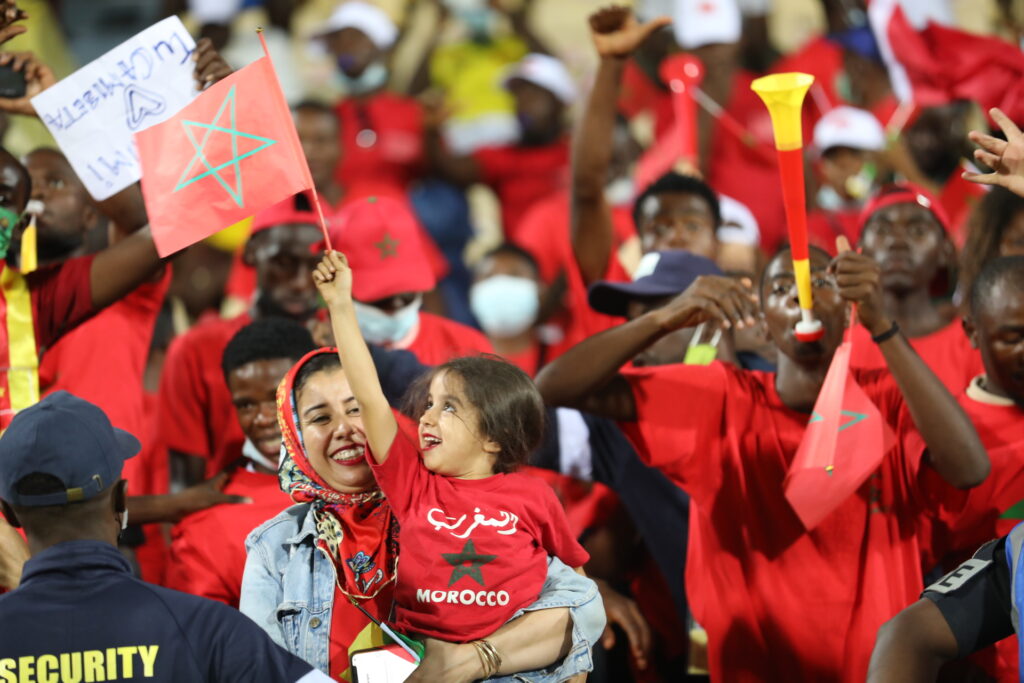
Thus, Morocco’s appearance as hosts and finalists in the 2025 AFCON tournament felt like deliverance from the AFCON mishaps that had troubled them years before. Until the 90th minute. Morocco and Senegal were still locked at 0–0 when the Video Assistant Referee (VAR) sent the center referee to the monitor to investigate a possible foul on Morocco’s Brahimi Díaz in Senegal’s penalty box. The referee judged it to be worthy of a sanction. Morocco was given a penalty triggering a dispute by Senegal’s players and staff who walked off the pitch for more than ten minutes before being convinced back on the pitch by their captain Sadio Mane. Díaz stepped up to take the penalty, trying a Panenka that Senegal’s Édouard Mendy read all the way and saved it. The match was decided in extra time via Senegal’s Papa Gueye’s belter of a strike into the top corner. By the time Senegal won it 1–0 , deliverance for Morocco turned to déjà vu.
The crown jewel eluded their grasp in such controversial fashion that the Moroccan football federation filed a protest to CAF’s Disciplinary Board challenging the circumstances under which play had broken down after the penalty award. They argued that Senegal’s walk-off and the chaos surrounding the restart had crossed the line from gamesmanship into a violation grave enough to taint the result itself. CAF’s Disciplinary Board acknowledged the final had descended into disrepute, sanctioning both federations, as well as multiple players and officials, over conduct linked to the match. Yet even as the Disciplinary Board acknowledged that the match had descended into chaos, they rejected Morocco’s protest, leaving Senegal’s victory on the field intact for the moment.
Enter the CAF Appeal Board. Morocco appealed the rejection of its protest, asking the Appeal Board to recognise that Senegal’s walk-off was grave enough to carry the consequence of forfeiture. The Appeal Board ruled in Morocco’s favour. It set aside the earlier rejection and held that Senegal’s departure from the pitch amounted to forfeiture, transforming a 1–0 defeat after extra time into a 3–0 victory on paper for the hosts. Hence the nighttime jubilations in the streets of Morocco.
While celebrations spilled into the night in Morocco after CAF’s appellate ruling, Senegal’s official response was delivered early afternoon on 18 March. The Senegal government denounced the decision and called for an international inquiry, while the football federation moved to prepare its challenge at CAS. In the public sphere, a large share of the reaction leaned towards suspicion that Morocco had benefited from underhand influence and that Senegal had been wronged. CAF president Patrice Motsepe even felt compelled to publicly deny any preferential treatment toward any country while acknowledging trust and integrity issues in African football.
Different Form Same Function
The significance of the Morocco-Senegal saga lies not just in its drama, but in how common sporting consequences across Africa are increasingly being reopened through petitions, protests, and appeals.
On the same day CAF’s Appeal Board delivered the bombshell ruling, the FIFA Disciplinary Committee had thrown out an appeal filed by Nigeria against Democratic Republic of Congo (DRC). Nigeria alleged that DRC had fielded ineligible players in a World Cup playoff, a match that resulted in Nigeria being knocked out of the race for the 2026 World Cup. Following the dismissal by FIFA, the Nigerian federation announced that they had commenced the process of appealing to the FIFA Appeal Committee.
In a span of just four months, three of Africa’s football heavyweights have resorted to procedural argument to influence sporting consequences. Indeed, the form of the appeals are different but the function is the same where sporting outcomes are being fought long after the final whistle.
Even beyond national teams, club football within CAF’s jurisdiction is replete with appeals and protests over strikingly similar issues. In the 2019 CAF Champions League final, Tunisia’s Espérance were declared champions after Morocco’s Wydad Casablanca refused to continue playing when a goal was disallowed and VAR was unavailable, turning an officiating dispute into years of disciplinary and CAS litigation. And in the 2023 Confederation Cup, Togo’s ASKO de Kara challenged Egypt’s Future FC over the use of an ineligible player, with CAF later overturning results and awarding forfeits.
This pattern does not emerge in a vacuum because the inception of CAF eons ago continues to shape, if not haunt, the football landscape in the continent and more broadly in FIFA. I have demonstrated elsewhere how African football federations were not formed as just sporting entities who met technical footballing standards. Instead, CAF’s founding stipulation to only accept federations from independent states tethered federations to political allegiances, interests and incentives way before their competence on football administration was tested.
Furthermore, this political function was reinforced during João Havelange’s campaign for the FIFA presidency. In 1974, he courted African and Asian federations with promises of greater funding and more World Cup slots. What made that courtship so consequential was FIFA’s equal-vote structure. Smaller football federations such as Chad, Lesotho, Gabon, Malawi and Mauritania, possess the same formal voting power in FIFA’s Congress as century-old federations like England, Germany, the Netherlands and Spain, their football prowess notwithstanding. Havelange won and kept true to his promise. The World Cup, which had 16 teams in 1974 and 1978, expanded to 24 in 1982, doubling Africa’s representation from one place to two. FIFA also began to scale up development and training programmes for member associations especially in regions that had long sat at the margins of football’s institutional power. Essentially, Africa’s path to footballing benefits was paved with canvassing.
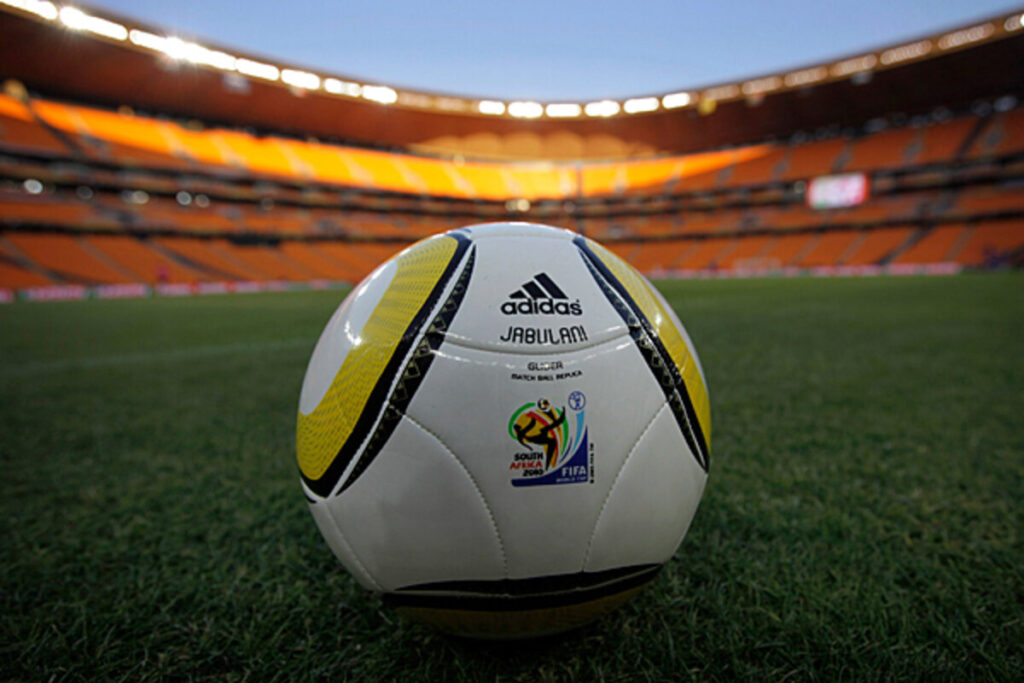
The Blatter years showed Africa’s political weight moving into the prestige economy of hosting. Blatter came to power in 1998 with substantial support from African associations, even though CAF’s executive had backed his rival. Two years later, after South Africa’s one-vote loss to Germany in the bid for the 2006 World Cup triggered arbitration threats and legal protest by South Africa, FIFA’s Executive Committee backed a rotation policy that effectively reserved the 2010 tournament for Africa. South Africa would eventually win that intra-African race ahead of Morocco and Egypt with Blatter claiming that this was a reward for African Football. The same federations that initially ascended to CAF as decolonisation projects with subtle interests in football, were now pulling their political and legal weight in the World Cup hosting question.
Granted, the selection of hosts for different major sporting events usually entails bidding and voting–mechanisms that are similar to how the FIFA World Cup host is determined. What is peculiar in world football compared to the Olympics for example, is the make up of who has the votes. In the International Olympic Committee (IOC), the power of the final vote sits with IOC members who are first filtered through an internal recruitment and election process before they ever get a vote. In FIFA, by contrast, the decisive political weight historically runs through member associations, meaning officials of national football federations, oftentimes the presidents, act as the voting units. It does not make the IOC model better but it makes FIFA’s process susceptible to the politics of federations, blocs, confederations, and all the bargaining that comes with them.
What’s more, the judicial bodies meant to adjudicate over issues concerning the sporting institutions are hardly separate from the politics of the system. Take CAF, for example, where the presidents and vice-presidents of the Disciplinary Board and Appeal Board are proposed by the Executive Committee and elected by the General Assembly, while the other members are appointed directly by the Executive Committee. The ExCo is itself elected by the General Assembly which is made up of representatives of respective national associations (e.g, the president of Tanzania Football Federation). In other words, the legal bodies that interpret rules and decide sanctions are still constituted within the same federation-political order that runs African football more broadly. Concerns of this kind are not unique to CAF. In debates around CAS, too, lawyers, courts and scholars have long questioned how far a sports tribunal can truly be independent when it is constituted from within the broader governance order of sport itself.
When national football federations carry such political weight, the same bargaining logic that informs bids for FIFA World Cup hosts can also travel into regulatory questions that bear directly on sporting advantage. This was the case in 2009 during Algeria’s successful motion at the FIFA Congress which removed the age limit for players seeking to switch national teams and a decade later in 2020, when FIFA further relaxed national team eligibility rules. Although reports have it that Morocco were chief lobbyists of the 2020 reform, even Cape Verde had been calling for greater flexibility for players trapped by only one or two appearances for a national side they were unlikely to represent again. The outcome of this collective effort by CAF affiliates yielded a pathway for ready-made talent in the diaspora, a phenomenon I have argued masks the neglect of the local pipeline.
If canvassing once helped secure places at the World Cup, and later shaped who could host it or who could switch allegiance to play in it, then it should not be surprising that such cards are pulled to influence tournament results. It should also not be surprising that protests and controversies usually hidden within the confines of African club football are now manifesting on Africa’s national teams. As such, Morocco’s attempt to recover a trophy through appellate process is not an aberration of the system but the latest expression of its own making. A feature, not a bug.
And so, while debates on whether Morocco, DRC, Senegal etc played by the rules are important, we should also concern ourselves with why canvassing, political maneuvering and legal appeals have become so available, so intelligible and so legitimate within African football in the first place. Why is it that sporting excellence is not pursued and measured through coaching, player development and sustainable football leagues, but through petitions, lobbying, diaspora recruitment, reforms and political bargaining? That a football verdict becomes the grandest political theatre and the most politically charged topic in the continent when far more consequential questions of gerontocracy and economic policies struggle to command the same urgency is itself part of the pathology. It reveals that the sport is so saturated with political meaning that victories and defeats become proxies through which states perform legitimacy and federations litigate prestige. Until we step out of the frame and imagine a different way of governing/ administering football, we will keep sending scapegoats into the wilderness while preserving the altar that demands them.