The scenes in the AFCON final were a perfect encapsulation of how the Confederation of African Football is governed. In Rabat, Senegal and hosts Morocco were still locked at 0–0 when, deep into stoppage time, VAR dragged the referee to the monitor, a soft penalty was given to the home side, and in the ensuing kerfuffle Senegal’s players and staff walked off the pitch for more than ten minutes before being convinced back on the pitch by Sadio Mane, only for Morocco’s Brahim Díaz to try a Panenka that Senegal’s Édouard Mendy read all the way. By the time Senegal finally won it 1–0 in extra time, the football itself had been overshadowed by the shambolic officiating, gamesmanship from both teams and military presence deployed to restore order in the stands.
It’s not that the referee was uniquely abysmal. Referees in CAF competitions operate in an environment where CAF officials have form for intimidation. Last year CAF quietly fired its head of refereeing after a wave of complaints about bias and political interference. And so, Senegal feeling that their only leverage was to walk off en masse is what refereeing looks like when the whistle is under political pressure and, I reiterate, the system showing you its face in real time.
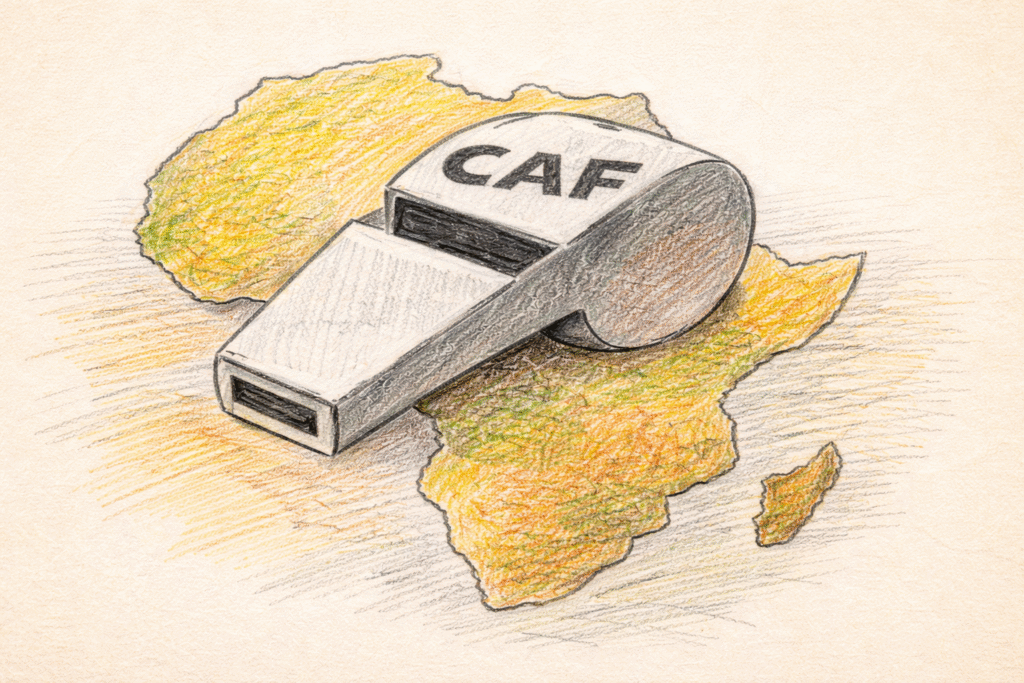
Nonetheless, the AFCON 2025 was a clear declaration of CAF’s strategy of courting the African diaspora as a primary market. CAF’s general secretary stated that “the diaspora has since become our biggest driver of ticket sales.” This is understandable as the diaspora have the capital, but the lot ought to know that the state of African football is not as rosy as CAF portrays it to be.
The local ecosystem that is supposed to produce the next generation is neglected. Salaries are late and sometimes unpaid, league calendars are unstable, and infrastructure is built for photo ops rather than week-in, week-out football. The diaspora players that African federations lean on become the hook that pulls in diaspora eyes, diaspora wallets, and diaspora emotions and CAF monetises that attention while the domestic game stays starved.
African football can and should thrive. But it cannot thrive through and within CAF as it is currently structured. Most of these high-profile fans — Dave, Mbappé, Tchouameni etc. — feel they’re paying homage to the motherland through their support. I get the sentiment. It feels symbolic, affirming, like years of Europe-centred football is being corrected. But if you follow the money, that homage is being captured by CAF and by federations that have done the bare minimum for the game at home. The nostalgia and African pride is being converted into revenue that feeds the same networks that have blocked structural change for decades.
The best way forward is to divest from CAF. Diaspora capital should stop assuming that the only legitimate route is through recognised FAs and their club ecosystems, and instead build parallel structures that do not need CAF’s blessing to exist: franchise-style leagues, privately governed clubs, independent academies that don’t exist as feeder arms for federations, creator-led competitions with their own media and broadcast deals, and direct contracts with players that hard-wire in protections CAF has failed to enforce. All that is to be demanded of CAF and federations is to move out of the way and not frustrate such efforts. The African diaspora is involved in building à la Ballers League in the UK: creator-led, franchise-style football that bypasses the FA and the traditional gatekeepers. That logic can and should be replicated on the continent where leagues and clubs with clear ownership and incentives tied to player development and community. Otherwise, the inefficienct folk in CAF will keep reaping from the diaspora’s toil and gaslighting the world that they’re working, while the real football economy in Africa remains underdeveloped and dependent.